
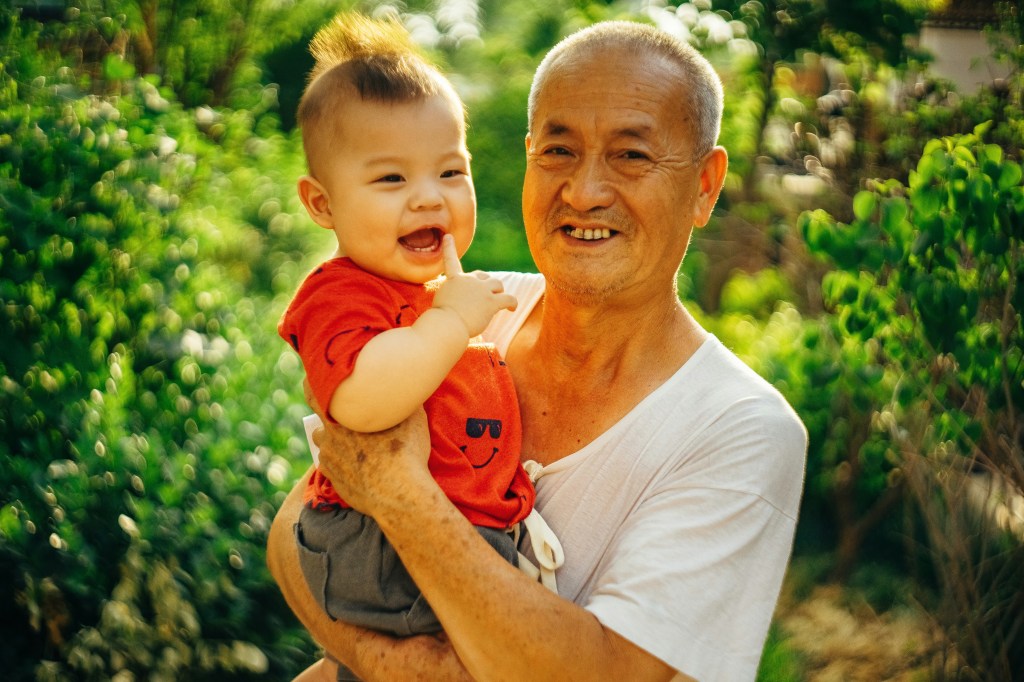
Life expectancies are increasing whilst fertility rates are decreasing. There are now more elderly than there are children within a generation. Additionally, a growing number of mothers are re-entering the workforce leaving grandparents to take on caregiving roles for their children.
A 2009 study published in ‘Children & Society’ entitled “‘They’ve Always Been There for Me’: Grandparental Involvement and Child Well-Being” conducted by Julia Griggs and three other authors explores the impact Grandparents have on a childs’ overall well-being. It examines the role of grandparents and its effect on children in modern family dynamics in the United Kingdom, where changes in family structures, such as higher divorce rates and dual-income households, have made grandparents more involved in caregiving.
How was the Study Done?
The study was conducted in two parts to explore the relationship between young people (aged 11–16, with an average age of 13) and their grandparents in England and Wales. A survey was administered to 1,569 young people from randomly selected schools to ensure a diverse sample. While most participants were White British, the study also included individuals from Black African, Asian, and White European backgrounds. The majority lived in urban or suburban areas, with a smaller number from rural locations. Most children lived with both biological parents, while some resided with their mother, their mother and her partner, or their grandmother.
The survey covered several key topics:
- Family Background: Family structure, school performance, special education needs, and eligibility for free school meals.
- Grandparents’ Characteristics: Their health, education level, and distance from their grandchildren.
- Grandparental Involvement: Their role in caregiving, school activities, and social interactions.
- Parental Role: How parents facilitate and maintain the grandparent-grandchild relationship.
The study also assessed young people’s psychological well-being using a questionnaire that measured emotional and behavioral challenges. Additionally, it examined contextual risks, such as family hardships (e.g. death in a family) and the level of poverty in the participants’ school areas. By combining survey data and interviews, the study analysed how grandparental involvement impacts children’s well-being, taking into account factors like family type and financial difficulties.
To gain deeper insights, 40 young people were selected for interviews lasting 40 minutes to an hour, conducted in their homes. These confidential discussions focused on how and why grandparents influence their lives. Conversations were recorded, transcribed, and analysed to identify common themes.
Grandparents’ Crucial Role in Emotional Support
The survey found that grandparents play a crucial role in providing emotional support to children. Many children see their grandparents as trusted confidants and a “safe space” where they can express their feelings without judgment. This emotional support positively impacts children’s well-being, with those who have actively involved grandparents experiencing higher emotional stability and better psychological health. Regular interaction with grandparents is also linked to lower levels of anxiety and depression, especially in single-parent or divorced families.
Beyond emotional support, grandparents also provide practical care by assisting with childcare, schoolwork, transportation, and daily routines, particularly in households where both parents work. They often engage in shared activities like storytelling, games, and outings, which help strengthen family bonds.
The level of grandparental involvement varies based on factors such as proximity—grandparents who live closer tend to be more engaged. Family structure also plays a role, as children from single-parent or financially struggling households rely more on their grandparents for support. Cultural norms further influence their involvement, with some cultures emphasising more active caregiving roles.
Grandparents often become especially important during major life transitions, such as parental divorce, providing stability, reassurance, and even mediating family conflicts to maintain household harmony.
Emotional Anchors, Practical Support and More…
The second part of the study, the qualitative part, through interviews and open-ended survey questions focused on how and why grandparental involvement impacts children’s well-being, using in-depth interviews with the students. The findings highlighted the emotional, practical, and relational roles grandparents play in children’s lives.
1. Grandparents as Emotional Anchors
- Many children described their grandparents as a source of comfort and security, especially during family difficulties.
- Grandparents provided non-judgmental support, acting as trusted confidants whom children turned to for advice and reassurance.
- Their presence created a sense of stability and consistency, particularly in cases of parental divorce or family conflict.
2. Practical Support and Caregiving
- Grandparents helped with childcare, schoolwork, and daily routines, easing the burden on parents.
- They played a significant role in daily activities such as school drop-offs, meal preparation, and household chores, particularly in working families.
- In some families, grandparents acted as primary caregivers, especially when parents had demanding jobs or were absent.
3. Strengthening Family Bonds
- Many children viewed their grandparents as role models who passed down values, traditions, and cultural knowledge.
- Shared activities helped create a sense of belonging and family unity.
- Grandparents often played a peacemaking role, helping to mediate conflicts between parents and children.
4. Variability in Grandparental Involvement
- The level of involvement depended on factors like geographical distance, health status, and family dynamics.
- Children from single-parent or financially struggling families relied more on their grandparents for support.
- Some grandparents were more actively engaged due to cultural expectations, while others had limited roles due to personal circumstances.
5. The Impact of Grandparental Support on Child Well-Being
- Children with strong grandparental relationships reported greater emotional resilience and lower stress levels.
- Grandparents helped young people navigate difficult life events, such as bullying, academic struggles, or parental separation.
- The presence of a caring grandparent boosted children’s confidence and sense of security.
The study highlights that grandparents play a crucial role beyond caregiving, serving as emotional anchors, mentors, and family stabilisers. Their involvement positively impacts children’s mental health, emotional resilience, and family relationships, particularly during challenging periods such as parental separation or financial difficulties.
Children with engaged grandparents tend to experience greater emotional security, lower stress, and stronger self-esteem. Grandparents act as a protective buffer against negative experiences like family conflict or bullying, fostering social confidence and psychological well-being. Their level of involvement, however, varies based on factors such as geographic proximity, health, family structure, and cultural expectations. They tend to be more active in single-parent and lower-income households, where their support is often essential.
The study suggests that there should be a formal recognition of grandparents’ contributions, advocating for financial, healthcare, and caregiving support to strengthen intergenerational bonds. Community programs and workplace flexibility could also help enhance family resilience.
Limitations
However, the study acknowledges limitations. Not all grandparent-grandchild relationships are positive, as generational differences can sometimes lead to conflict. The research relies on self-reported data from grandparents and children, which may introduce biases. Additionally, the study is geographically limited to England and Wales and does not track long-term trends in grandparental involvement. While it touches on custodial care, it does not explore its challenges in depth.
Conclusion
Overall, the study concludes that grandparents provide essential emotional, social, practical, and financial support, especially in vulnerable families. Their impact on child well-being is significant but depends on factors like relationship quality, emotional closeness, and family dynamics.
 Grander Together
Leave a comment