
What are the causes of intergenerational gaps? What are some practical ways to bridge them?
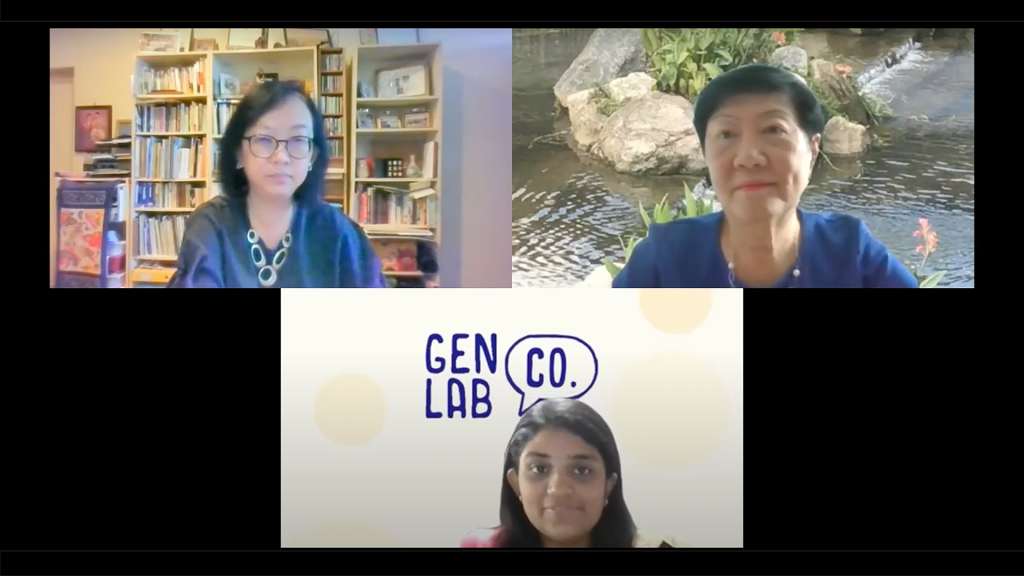
This was a topic explored in the March 2022 episode of the GenChat series featuring Associate Professor (Dr) Thang Leng Leng and Mrs Anne Lee. It was organised by GenLab Collective, a non-profit, youth-led initiative founded in 2021 and dedicated to bridging the generation gap within communities. It serves as a platform for people of all ages to share, learn, and collaborate, fostering long-term intergenerational understanding.
Dr Thang Leng Leng is an Associate Professor and Head of the Department of Japanese Studies at the National University of Singapore. She specialises in ageing, intergenerational relationships, and family dynamics, with a research focus on Japan, Singapore, and Asia.
Mrs Anne Lee is a former History and General Paper teacher at Serangoon Junior College, where she also served as an advisor for student welfare and pastoral care. Trained in counselling, she continues to be actively involved in marital and family counseling through her church.
Moderated by Keerthana from GenLab, the panellists shared valuable insights from research and personal experiences regarding the bridging of generational gaps. In summary, here are three valuable things we can take away from their sharing:
1. Mutual Respect Leads To Better Transmission of Values
Generational gaps often emerge when there is an age difference of 20 years or more, affecting parent-child and grandparent-grandchild relationships. To bridge this divide, mutual respect and understanding are crucial. Mrs Lee emphasised that older generations should avoid adopting a controlling or superior stance over younger ones. When the transmission of values is forced rather than nurtured, barriers arise, leading to the loss of traditions and wisdom.
Continuity is key to preserving cultural and moral values across generations. However, when values are not consciously passed down, discontinuity occurs, widening the intergenerational gap. Professor Thang suggested that older generations should seek to understand the younger generation’s perspectives by engaging with them empathetically. Both she and Mrs Lee encouraged grandparents to reflect on their youth, recalling their impulsiveness and rebelliousness, to foster greater respect, empathy, and connection:
“We must never forget where we came from, we were once like that young rebellious…it’s just a different expression…it’s very important to respect each other’s generation and accept it.”
2. Intentional Relationship-Building Through Shared Experiences
Mrs Lee shared her personal experience in fostering mutual respect with her students and grandchildren. She intentionally took the time to understand their interests—learning about trends, engaging in play despite fatigue, and making an effort to relate to them. This built trust and created an open space for meaningful and intentional interactions, where the younger generation felt comfortable listening and engaging in return.
Professor Thang referenced an analogy by Dexter Tai, comparing intergenerational bonding to a “bank transaction.” One cannot expect to withdraw trust and respect from the younger generation without first depositing care, love, and effort. Older generations must first invest in these relationships before expecting receptiveness or engagement.
Additionally, engaging in shared activities fosters deeper bonds. Professor Thang highlighted the misconception that older individuals are too frail or prone to illness to interact with young children. This belief often leads to unnecessary separation between generations. She cited a European programme where elderly individuals were encouraged to interact with youth through a cycling initiative. Older men, skilled in repairing bicycles, helped maintain the bikes while conversing with the younger participants. This interaction not only strengthened their bond but also facilitated the transfer of practical skills and wisdom.
3. Creating Spaces for Open Communication and Connection
Intergenerational gaps often stem from a lack of open communication and the influence of misconceptions shaped by media and societal biases. One of the most effective ways to bridge this gap is to foster relatability and create opportunities for meaningful dialogue.
Professor Thang emphasised that listening is crucial, citing the phrase: “We have one mouth and two ears—so we should listen twice as much as we speak.” True understanding requires actively listening, accepting differences, and respecting each other as individuals. Each generation has its struggles and influences, whether it be individualism, social media, or traditional values. Instead of dismissing these challenges, they should be acknowledged and navigated together.
Seniors, in particular, can take the first step in reaching out by reminiscing about their youth and adapting to modern communication styles. Professor Thang also suggested that they should see themselves as mentors rather than burdens to the younger generation. Lovingly reasoning with them in times when they need comfort.
Professor Thang shared a personal example of how her son and his grandparents built a connection through a simple yet effective arrangement—her son, after getting his driver’s license, occasionally borrowed their car. In return, he would bring small gifts and spend time with them. This exchange provided natural opportunities for conversation and bonding, demonstrating how strategic efforts can create space for intergenerational connections. She exhorted grandparents:
“Be a little more strategic as grandparents if you really want to open up and [want] to have more connections with grandchildren.”
Conclusion
Ultimately, intergenerational relationships thrive when time, care, and love are deposited before expecting trust and respect in return. Each generation possesses unique strengths—youth bring energy and tech-savviness, while seniors offer wisdom and experience. By embracing these strengths and working together, society can debunk the myth that different generations will never understand each other and instead build a more connected, cohesive future.
The discussion also highlights the need for social interaction in enriching seniors’ later years, reinforcing the idea that generational continuity must be actively fostered to prevent values from being lost over time.
Nonetheless, to bridge generation gaps is a one-sided effort or one that changes overnight. It takes time, effort, continuity, and intentionality.
 Grander Together
Leave a comment