
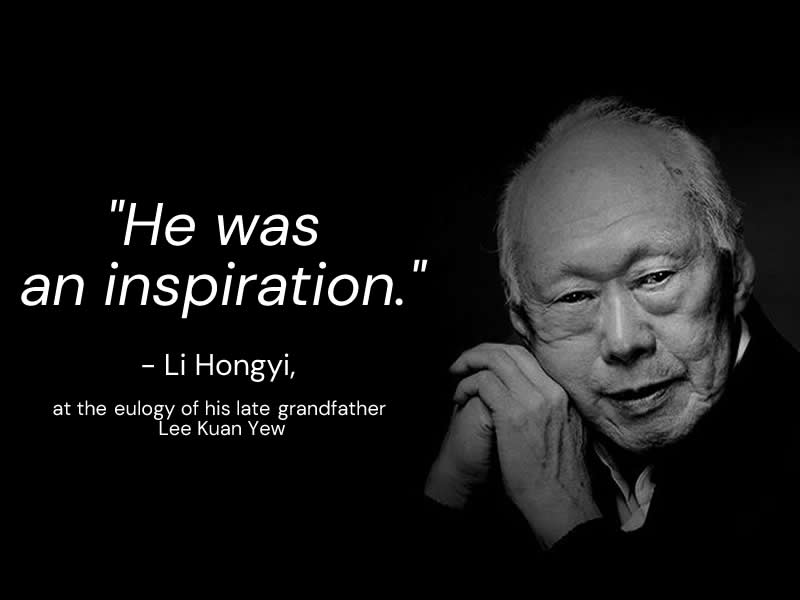
“Ye Ye was more than a grandfather to me. He was an inspiration. When I was young, I wanted to grow up to be the man like him. And even now, I still do.”
Those were the words of Li Hongyi, grandson of Singapore’s founding Prime Minister Mr Lee Kuan Yew. He spoke them ten years ago, at the eulogy of his grandfather in March 2015.
Mr Lee gave many speeches and interviews in his lifetime.
He rarely spoke about his grandchildren. But when he did, he revealed himself to be a doting grandfather.
Here are some important takeaway lessons we have learned:
1. Strong emphasis on family
The late Mr Lee Kuan Yew believed strongly in the family unit as the foundational building block of society.
This includes the multi-generational family. In 1982, he bemoaned the “breakup of the three-generation family” as something “we must avoid at all costs”.
This was something that Mr Lee put into practice in his personal life, when the first wife of his eldest son Hsien Loong died. The late Mr Lee and his wife Geok Choo spent time with the two grandchildren Xiuqi and Yipeng, “to fill the gap and help bring them up”, in the words of Lee Hsien Loong. The two grandparents took the grandchildren for walks after dinner every night in the Istana.
In one of Mr Lee Kuan Yew’s most in-depth interviews, Mr Lee quoted a Chinese aphorism xiushen qijia zhigua pingtianxia (修身、齐家、治国、平天下) to encapsulate his belief in family. In his words:
- Xiushen: Look after yourself, cultivate yourself, do everything to make yourself useful
- Qijia: Look after the family
- Zhiguo: Look after the country
- Pingtianxia: All is peaceful under heaven
In that 1994 interview with renowned journalist Fareed Zakaria, Mr Lee noted that his granddaughter was named Xiu-qi, because her instructed her to “cultivate herself and look after her family”.
He stressed the importance of family as “the basic concept of our civilisation”, adding that: “Governments will come, governments will go, but this endures.”
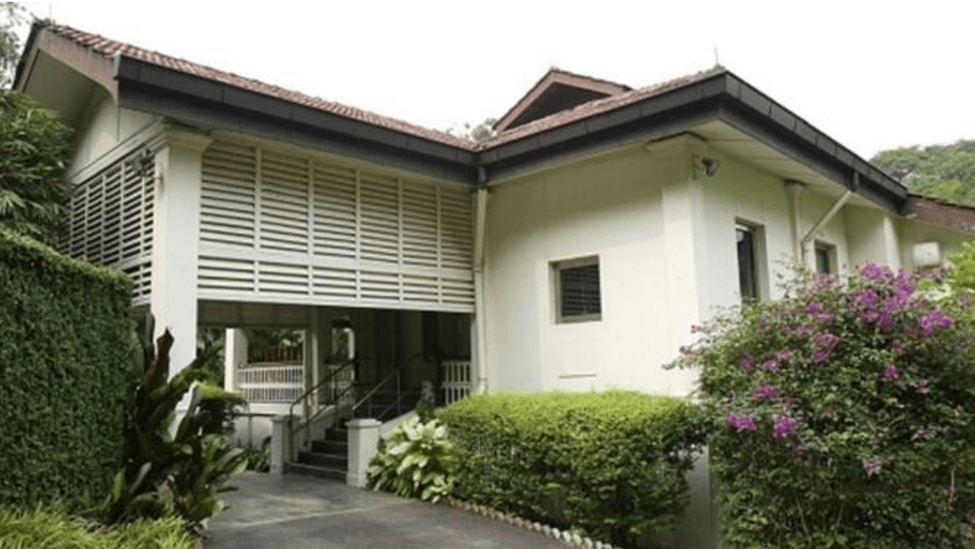
No. 38 Oxley Road, the family home of Mr and Mrs Lee Kuan Yew
2. Mealtime conversations are great for imparting lessons
At Mr Lee’s cremation service, his grandsons Li Hongyi and Li Shengwu both eulogised fondly about their regular Sunday lunches with “Ye Ye and Nai Nai” (paternal grandparents).
They ate simple things like mee rebus, nasi lemak and popiah.
Although the grandchildren sat at a separate table from their parents and grandparents, they still learnt a lot by listening in. “His voice and his hearty laugh would carry to the childrens’ table,” said Li Shengwu.
“After listening,” Li Hongyi recounted, “I would always feel a little bit silly because he made me realise how petty all the little problems in my life were and how there were so many more important things in the world. He made me want to do something more with my life.”
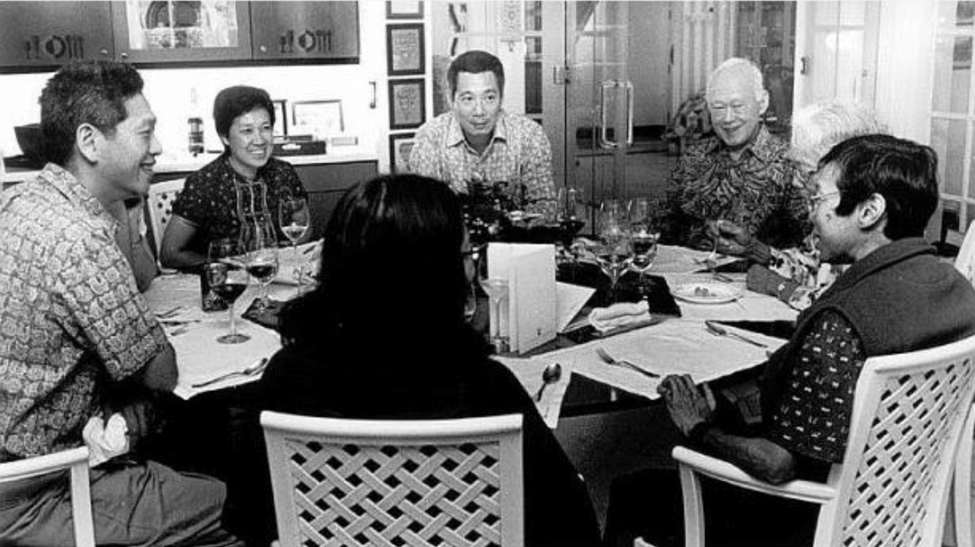
The Lee family at dinner
3. Bond over cultural traditions and holidays
The late Mr Lee and his wife would take the grandchildren on outings, to places like the zoo, to the Science Centre and to the National Day celebration. Speaking light-heartedly, Li Shengwu believed as a child that the “chief benefit” of Mr Lee’s position was that “it came with a marvellous view of the fireworks”.
Li Shengwu spoke fondly about his grandparents’ practices during Chinese New Year: “Ye Ye loved his role as a doting grandfather. It delighted him, at each Chinese New Year, when the grandchildren would line up to greet him and receive hongbaos. After Nai Nai had her second stroke in June 2008, he continued the tradition, preparing himself the hongbaos for his grandchildren.”

Mr Lee Kuan Yew at the National Day Celebration 2014,
his final National Day before his passing in March 2015
4. Model good values
Many people will remember Singapore’s late founding Prime Minister for numerous good values that he sought to establish in Singapore, including honesty and integrity in public service, and a tough anti-corruption stance.
Mr Lee believed in the importance of family in transmitting social values, “more by osmosis than by formal instruction”, and his grandchildren learnt many different good values from him.
To Hongyi, his grandfather was “frank and honest”, with “thoroughly researched and well-considered perspectives”. At the same time, the late Mr Lee “understood the limits of his knowledge”. He was man of “character, clarity, and conviction”.
Ultimately, Li Hongyi learnt from the late Mr Lee that “you could do something good with your life, and the best way to do so was to have good principles and conduct yourself honourably.”
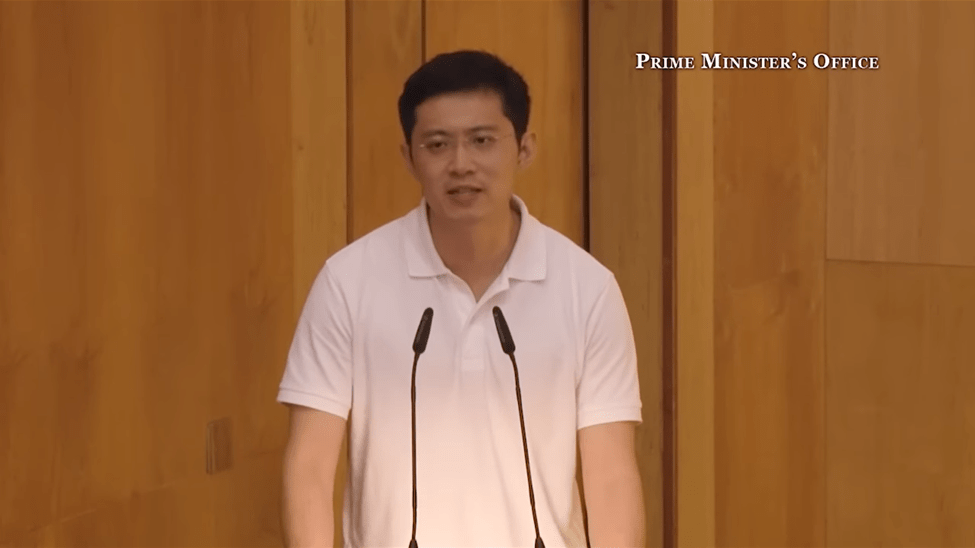
Li Hongyi delivering his grandfather’s eulogy
For Shengwu, Mr Lee’s contributions in establishing Singapore were the biggest lesson he learnt, noting that Mr Lee always saw the new generation of Singaporeans with “a mixture of trepidation and hope”.
Addressing his late grandfather in his eulogy, Li Shengwu said: “Ye Ye, you chose to forsake personal gain and the comforts of an ordinary life, so that the people of Singapore could have a better life for themselves, and for their children and for their grandchildren.”
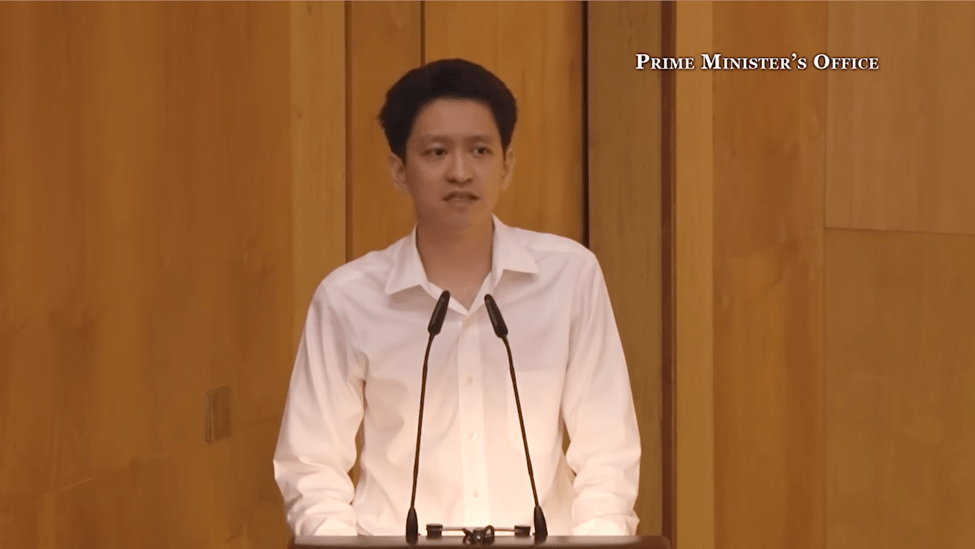
Li Shengwu delivering his grandfather’s eulogy
5. Special compassion for unique needs
In an interview with Shin Chew Daily when the late Mr Lee was still alive, he spoke fondly about his grandchildren. He loved all his grandchildren, but said that the one who was most endearing to him was Li Yipeng, who has a condition of albinism.
Li Yipeng was the eldest son born to former Prime Minister Lee Hsien Loong and his first wife Wong Ming Yang. Wong passed away in October 1982.
Although Yipeng has albinism, poor eyesight and slow learning, the late Mr Lee affirmed his grandson for being polite, eloquent and well-mannered. He was not discouraged by his challenges but slowly caught up.
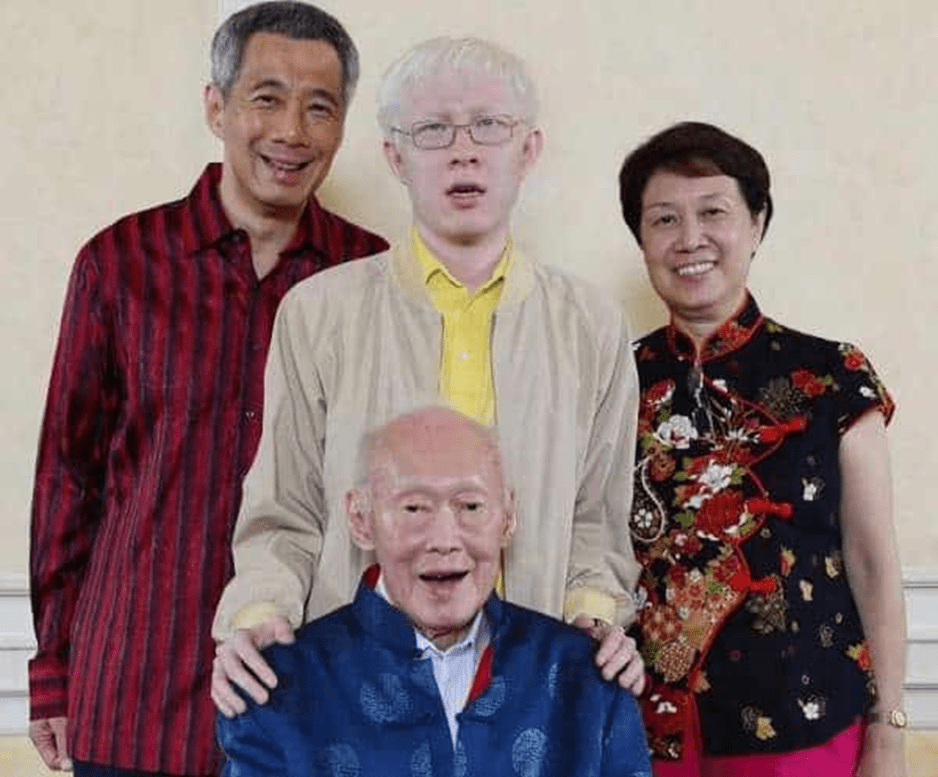
From top left (clockwise): Lee Hsien Loong, Li Yipeng, Ho Ching
and Lee Kuan Yew (seated)
Leaving a Legacy
The late founding Prime Minister made it clear throughout his life that he did not need and did not want any monument in his honour. His biggest legacy is the nation of Singapore itself, and the ideals that he envisioned.
One important piece of the puzzle in Singapore’s remarkable progress is the family unit. As Mr Lee wrote in his book, From Third World to First:
Singapore depends on the strength and influence of the family to keep society orderly and maintain a culture of thrift, hard work, filial piety and respect for elders and for scholarship and learning. These values make for a productive people and help economic growth.
Though no family is perfect, it is worth remembering the importance of the family in imparting a lasting legacy through the generations.
 Grander Together
Leave a comment