
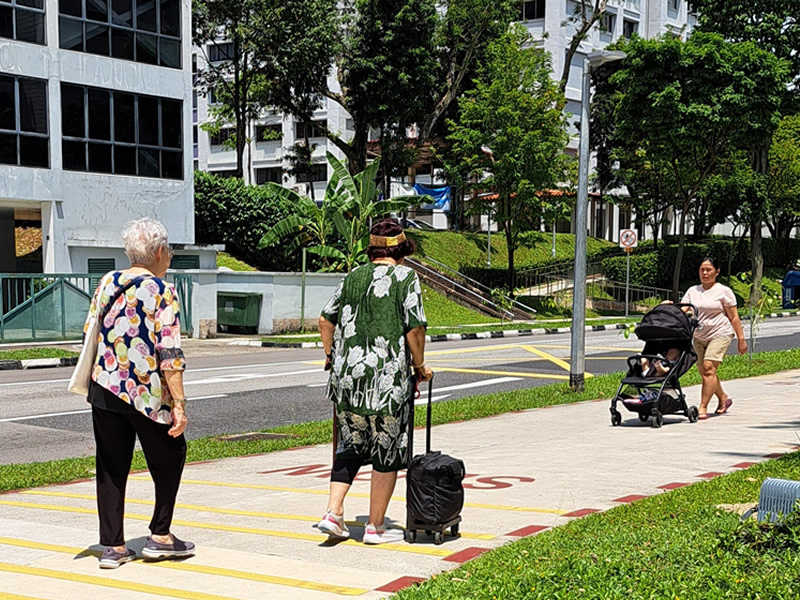
Childcare support is a critical aspect of family life. In Singapore, it is often seen that families rely on non-parental care as a means to enhance family-well being and support raising children. But does it make a difference when Mum’s parents help, as compared to Dad’s parents or domestic helpers?
This was a topic examined in a 2024 study published in the Journal of Marriage and Family titled, “Grandparents’ and Domestic Helpers’ Childcare Support: Implications for Well-being in Asian Families“. Conducted by Muoko Sudo from Nanyang Technological University and nine other authors, the study explored the various effects incurred by varying childcare supports towards the family well-being.
The study suggested that childcare support from maternal grandparents(i.e. Mum’s parents), who are most likely to share a close bond and value system with mothers, could be most beneficial for families in Singapore. However, the same did not apply to paternal grandparents (i.e. Dad’s parents) or domestic helpers.
How was the Study Done?
The study examined the impact of childcare support provided by maternal grandparents, paternal grandparents, and domestic helpers have on maternal well-being, parenting behaviors. It assessed how childcare support arrangements have potential spillover effects towards a child’s well-being, and overall family dynamics in Singapore.
The study analysed data from 615 mother-and-child duos as part of the Growing Up in SingaporeTowards Healthy Outcomes (GUSTO) study, a major collaborative research effort involving partners across Singapore from healthcare and research alike.
Participants were recruited from two locations: National University of Singapore Hospital andKK Women’s and Children’s Hospital between 2009 and 2010. Caregivers were required to fill up questionnaires which included topics like: family dynamics, caregiving arrangements, parenting styles, and caregivers’ well-being. Children were of the ages of 4.5-6 years old and duos were of the three major ethnic groups in Singapore (Chinese, Malay and Indian). The duos were measured against other mother-and-child duos with no support and were made up of duos of similar income range, mothers with similar educational backgrounds, mothers’ age and the sex of the children.
Positive Effects When Mum’s Parents Help
The study found that the difference in caregiving arrangements had significant impacts towards the mothers.
The study noted that maternal grandparents were associated with significant positive improvements towards the mothers overall well-being in terms of depressive and anxiety symptoms that are not as prevalent as compared to the other forms of care.
Mothers with help from their own mothers were less susceptible to being anxious or depressed during the early stages of motherhood.
Additionally, mothers tended to have a warmer parenting style (more authoritative, involved, more expressive in affection, better mentoring and awareness towards child’s activities and needs and less authoritarian). This association between the maternal grandparents and a mothers’ overall well-being and warmer parenting can be linked to the shared values, better communication and emotional understanding between the two.
However, there was limited impact when paternal grandparents and domestic helpers were involved. Relationships between the mothers and in-laws are more strained due to differences in expectations, cultural norms, and communication barriers. Domestic helpers were found to alleviate the practical burden of childcare but are not able to significantly improve maternal well-being. In some cases, their involvement led to increased stress in mothers and depressive symptoms in children.
The study also showed a spillover effect from the mothers’ parenting and well-being onto the family dynamics and especially the children’s well-being. When maternal grandparents were involved, it showed an improvement in children’s behaviour and depressive and anxiety symptoms up till the age of 10. Children with support from domestic helpers at age 6 years, in comparison to children who did not have any support, reported having more depressive feelings and having more interpersonal problems (communication difficulties, trust issues, and conflicts.)
As for family function, families with maternal grandparents as support had better family dynamics. They were more likely to identify and resolve problems, better communicators, household responsibilities are clear, assigned equally and were fulfilled, family members were more empathetic towards each other and had better behaviour control. Additionally, they were more involved in each other’s lives.
Limitations of the Study
As with any study, this study had some limitations.
The study had a small sample size as it was limited to participants recruited from two hospitals in Singapore. Ethnic representation was not balanced, which potentially restricts the applicability of the findings. The data collected at a single point in time did not allow the study to observe the long-term outcomes. It primarily reflected mothers’ perspectives, with little exploration of the views of fathers, grandparents, or domestic helpers. Additionally it relied on self-reported data, which has the potential of being biased.
The study highlighted the significant role of maternal grandparents in enhancing the overall maternal and child well-being, as well as the family dynamics. As compared to paternal grandparents or domestic helpers, which had little impact. Caregiving help from different parties can be a tool to improve the overall family dynamics, but the study also emphasised the importance of aligning expectations between parents and caregivers to maximise the benefits of caregiving support.
Conclusion
Practically, does this study mean that only maternal grandparents (i.e. Mum’s parents) should help with caregiving, and not paternal grandparents or domestic helpers?
Certainly, not, and the authors did intend the study that way either.
This study only shows that, from mothers’ perspectives, help from their parents was seen as most beneficial, as compared to their children’s paternal grandparents or domestic helpers.
Furthermore, the authors were made the point that, “[rather] than assuming that all childcare support is beneficial, it is important for families, healthcare professionals, policymakers, and researchers to carefully consider how the benefits reaped from childcare support could depend on who this support is provided by, and the nature of their relationship with the mother.”
 Grander Together
Leave a comment